
Transmutation
Turning imitation into originality

Transmutation is a concept derived from alchemy meaning the changing of one form into another. While this can be the transformation of one element, or substance into another, for instance lead into gold1, the term was also used by alchemists to mean conceptual and moral refinement of the soul.
In this article I will be using ‘transmutation’ as a broader concept to explore the ways in which artists and magicians can co-create aspects of reality. Especially as an approach to creating original works, inspired by existing ones, without simply producing direct copies.
Properties vs symbolic qualities
For our purposes, I will use the term ‘properties’ to describe attributes that can be understood empirically, for instance the car is blue, it weighs 1500kg, it has a top speed of 220 km per hour.
By ‘symbolic qualities’ I mean abstract comparisons, associations, or metaphors. For instance, the car has ‘feminine’ curves, and a ‘menacing’ grille. I can relate to it the way a knight related to his horse, and it can show other people that I’m a reckless speed junkie who likes to show of how much money I can spend.2
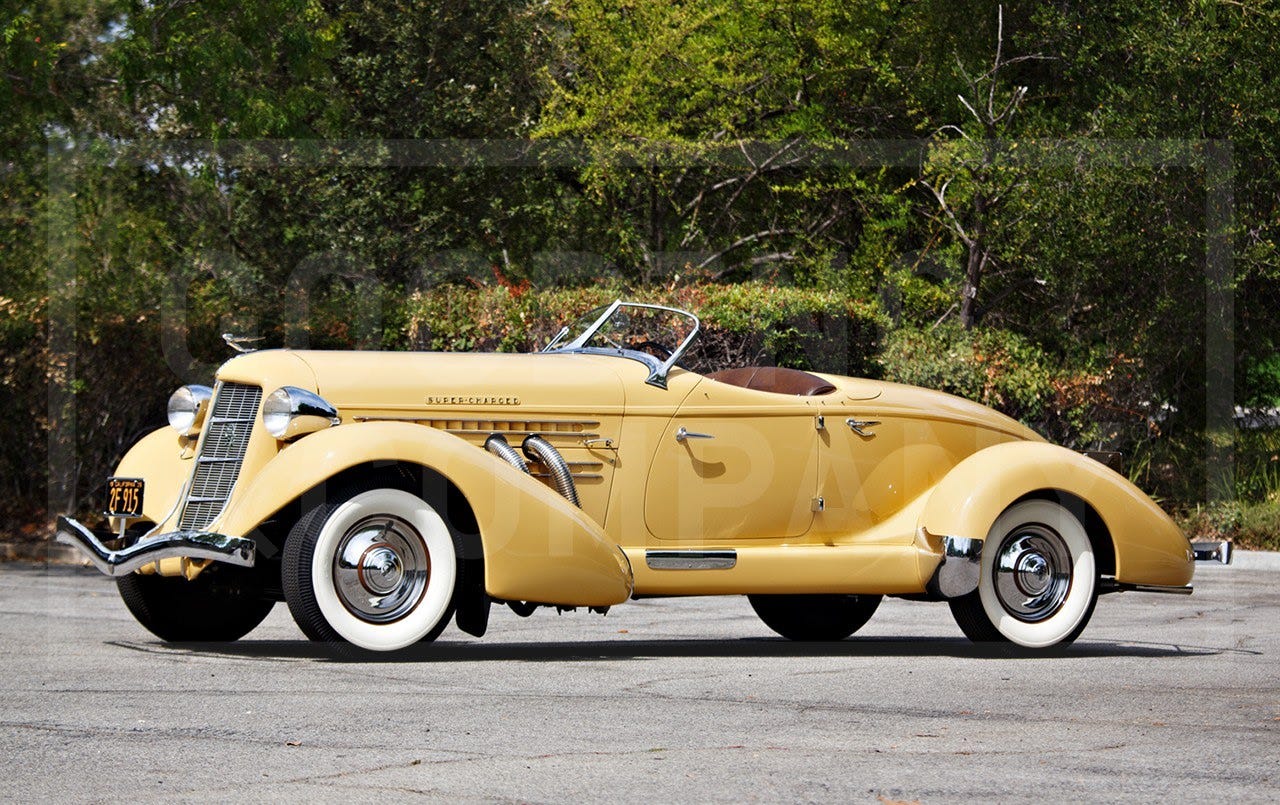
If I was a rich bastard, I might drive this gorgeous, yet stupidly impractical vehicle: a 1935 Auburn Speedster. It reminds me of a shark, a WWII fighter plane, a speed boat, and ‘old money’ characters like Tracy Samantha Lord, played by Grace Kelly, from the 1956 film High Society.
People who imitate, often to focus initially on the quantifiable properties of the thing they are inspired by. Thus they see a celebrity in a dapper red suit and they go out and buy a red suit. They can miss that the suit and the colour red might not actually be the source of ‘dapper’. Creative transmutation is more abstract and focuses on how the object of inspiration (or person) is communicating with us and how we could repurpose that communication, separately from the object. Thus, the person might explore ways they can achieve ‘dapper’ that would be an easier fit for their personality and frame. This is the approach that is most useful to magicians and artists: contemplating the qualities that are communicated instead of copying the properties.
For instance a sports car can have a symbolic relationship with a racing horse, a magic carpet and a cannonball. The marketing department of the car company might therefore name a new sports car model ‘cannonball’.
Examples of symbolic experiential qualities
• A lion, as a symbol, is ‘regal’.

• The element of water is emotional.
• A major chord is happy and the minor chord is sad.
Though often written off by analytical thinkers as arbitrary, I would argue that the strongest symbolic qualities are still based on experience, i.e. the Lion is regal because, for many people it embodies beauty and power, and is an apex predator, the top of the feeding ‘hierarchy’, which one can associate with the hierarchy of kingship. A king has control over an army, which could be poetically called his ‘teeth’ and ‘claws’. We experience symbolism like this all the time.
Major and minor chords make us feel different emotions, even though it can be nearly impossible to define why.3 We can however compare a the feeling of a major chord progression with the feeling of a child at their birthday party and a minor key progression with being rejected by your crush. Songwriters frequently come up with lyrics based on how chord progression make them feel.
Thinking in properties seems is more quantitative. For instance ‘the apple is red’, and it weighs 160 grams. Redness can however have symbolic qualities, such as the idea that ‘red is angry. ‘The apple is red therefore the apple is angry’ is a conflation of the two approaches, and this doesn’t usually communicate well, though beginner magicians and beginner poets, often fall in this trap.
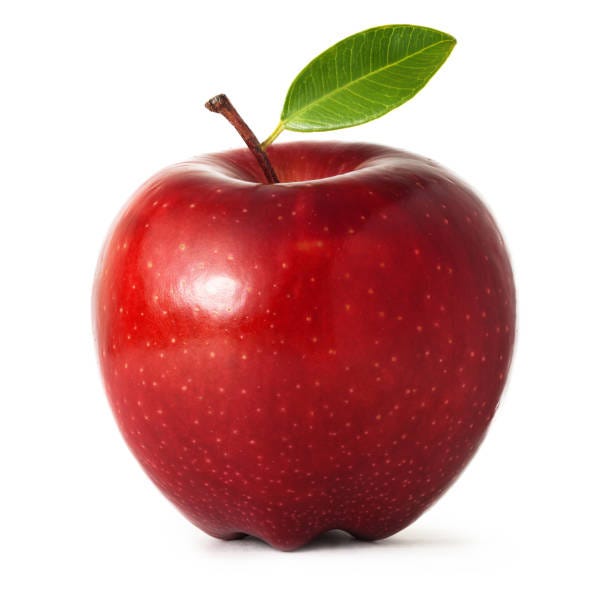
Look at how pissed off this apple is!
‘Red is (often) angry’ however has abstract magical, and story-telling power. So one might include a red apple when invoking Mars in order to give one an edge in a football game. Including various objects that all weigh 160 grams doesn’t carry the same magical appeal.
The concept of transmutation, treated creatively or magically, often utilises these associative connections. My thesis is that magic harnesses the this type of relational thinking and abstract story telling, in order to generate experiences. These associations are normally, processed more on the right side of the brain4, which is the part that takes in the bulk of new information from our environment, and therefore foundational to our powers of perception. That these qualities are hard to pin down, is partly due to the fact that the right side of the brain cannot speak, and these ‘right-sided’ experiences are therefore harder to explain. The primary language centres being on the left side5. Art and music often communicate these experience better, and more directly than language can.
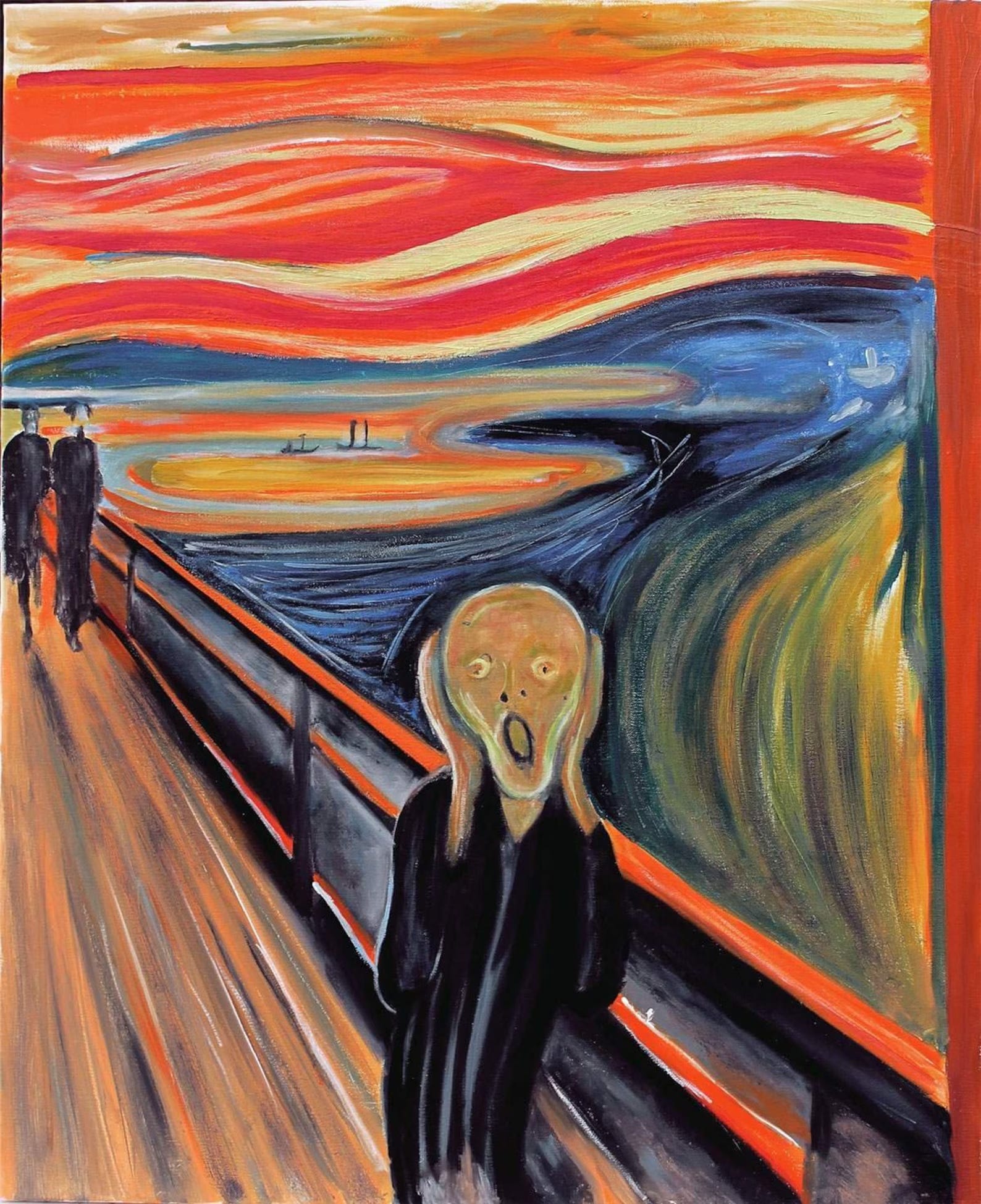
The Scream by Edvard Munch 1893
Transmutation in art
When we see something that we like, for instance an awesome guitar solo, or a triumphant kick of a football, part of us often seeks to copy it.
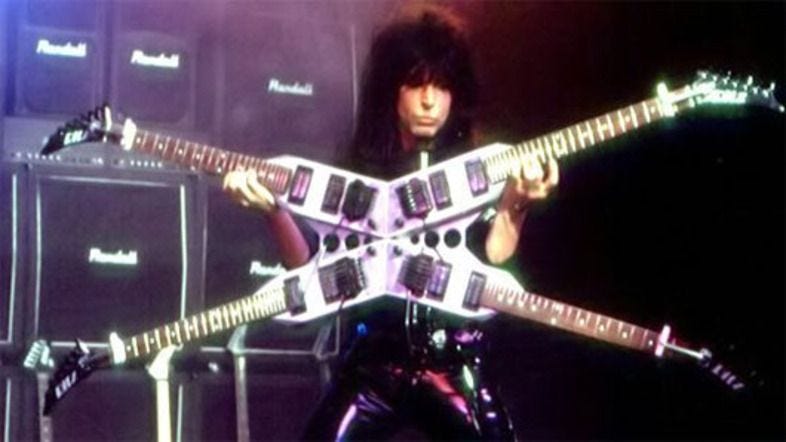
Michael Angelo Batio from the band Nitro, pictured in the music video ‘Freight Train’. Was this once the coolest thing in the entire universe?
As children, imitation is a huge part of our instinctive learning process, so it is only natural to feel the instinct to mimic. In imitation is a hope that one might directly gain the power of that which one is imitating.
Imitation alone however, is very limiting and might never teach you how a person truly achieves their results, for instance how they chose their attire or how they improvised a solo on guitar. Copying will get you closer than before, and help you comprehend their charm, but copying them note for note will never allow you to completely attain the abilities of the originator. While thinking magically and creatively, the more powerful act is to transmute. To understand the parameters they are playing with and then use these to make something of your own. Thus one might try and paint the feelings of a guitar solo, or make the well-dressed person a character in a novel. This obviously requires more effort, but it also opens up many more possibilities to act in the world.
For example, (first name) Hazel from the band Funkadelic, before recording ‘Maggot Brain’ (1971), a track consisting entirely of four chords and an improvised guitar solo, was told by bandleader, George Clinton to ‘play as if your mother just died’. He transmuted this emotion into his playing. Thus the right way to perform ‘Maggot Brain’, is not to play Hazel’s notes, as he never played it the same way twice, but for you to ‘play like your mama just died’. Thus I see no reason why you couldn’t play Maggot Brain on a clarinet backed by a piano, or paint a scene that captures the same feel in water colours. Jack Kerouac, the beat writer, formed his original prose style by trying to write novels the way he saw and heard Charlie Parker improvise bebop solos on his saxophone.
Compared to imitation, transmutation takes a leap into symbolism. A risk is taken to take something that already works, and use it for another form which might fail. This is the risk that creates the feeling of originality. The audience needs to feel ‘risk’ in art (whether apparent or actual). In transmutation, the artist or magician must bring themselves into the work, imparting their own ideas. Where imitation suggests ‘pretending to be’, transmutation suggests ‘becoming’.
I am circling the way the creative act is received, and this reception can be entirely illusory. From the artist or magician’s point of view, being original can still require pretending, and copying can still require ‘becoming’. However the distinction is in the results not the act. The most powerful acts of transmutation are those which affect many people. One ought to measure the act in how it is received.
All received originality has ‘transmutation’ in it.
Examples of transmutation
• Kate Bush’s ‘Wuthering Heights’ (1978), is a song inspired by a ghostly TV scene from the 1967 BBC adaption of Emily Brontë’s 1847 Novel. The song transmuted the TV scene which transmuted the Novel. Bush apparently hadn’t read the book before writing the song, which quite possibly made the song better, as it is lauded for it’s striking originality. Kate Bush was only 17 when she wrote it.
• Holst’s ‘the Planets’, is an orchestral work inspired by astrology and mythology, and transmuted into music. Black Sabbath took the piece ‘Mars’, and transmuted it to electric guitar to create their self-titled track, a seminal moment in the creation of the genre of Heavy Metal.
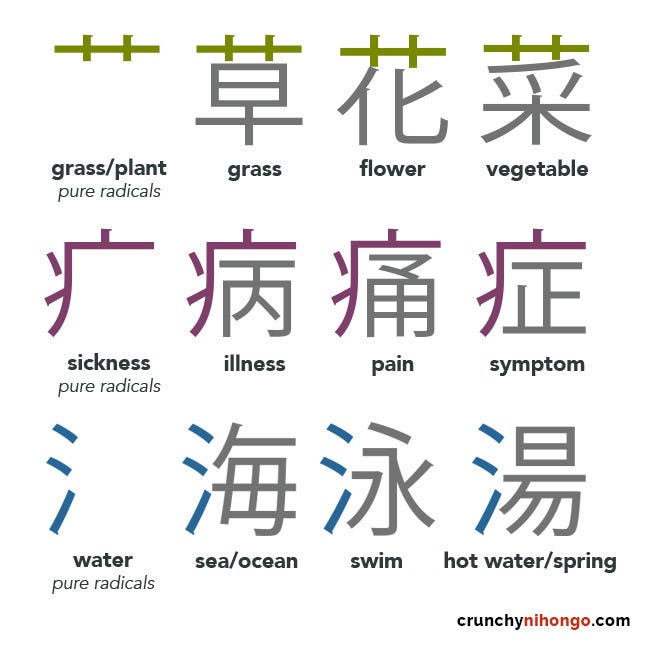
• Haiku, is the Japanese art of taking observations and impressions (usually of nature), and transmuting them into written poems. The best Haiku, are often judged as those which most capture a sensation. True Haiku exploit the versatility Japanese Kanji symbols, where the same spoken words can be written with many different symbols. Each Kanji symbol is made out of smaller symbols (radicals) which can also present internal meanings in the poem. Japanese names can also work this way.
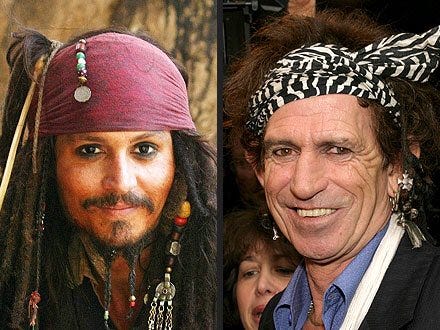
• Johnny Depp played ‘Keith Richards as a pirate’ while learning to embody the character of Jack Sparrow in the Pirates of the Caribbean film series (from 2003). This transmutation between rock-and-roll stage antics, ‘drunken’ body movements, and the ‘rebel’ nature shared by rockers and pirates, was instantly felt by fans of the film. Keith Richards enjoyed this pastiche enough that he played Jack Sparrows father in the sequels: At World’s End (2007) and On Stranger Tides (2011).
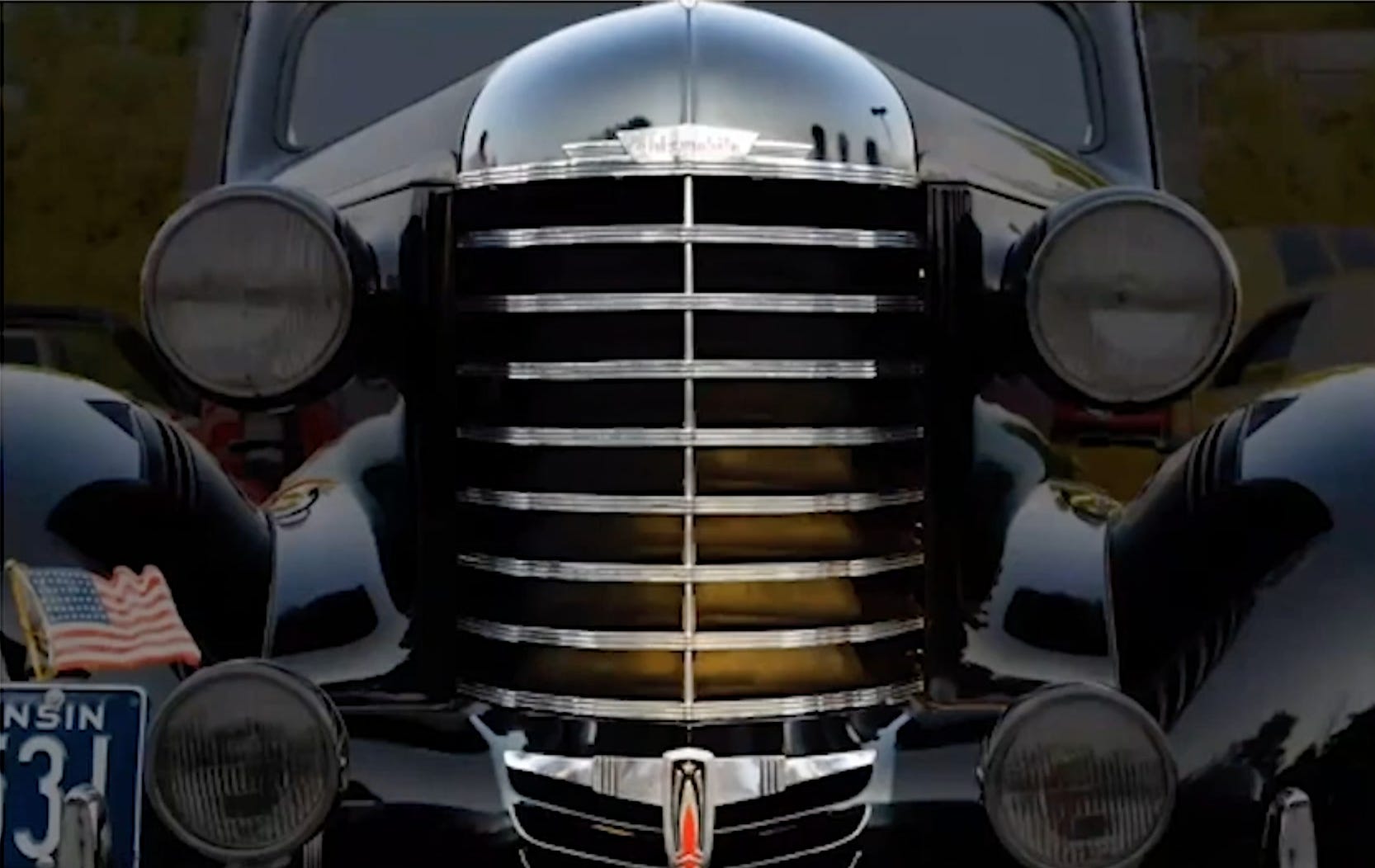
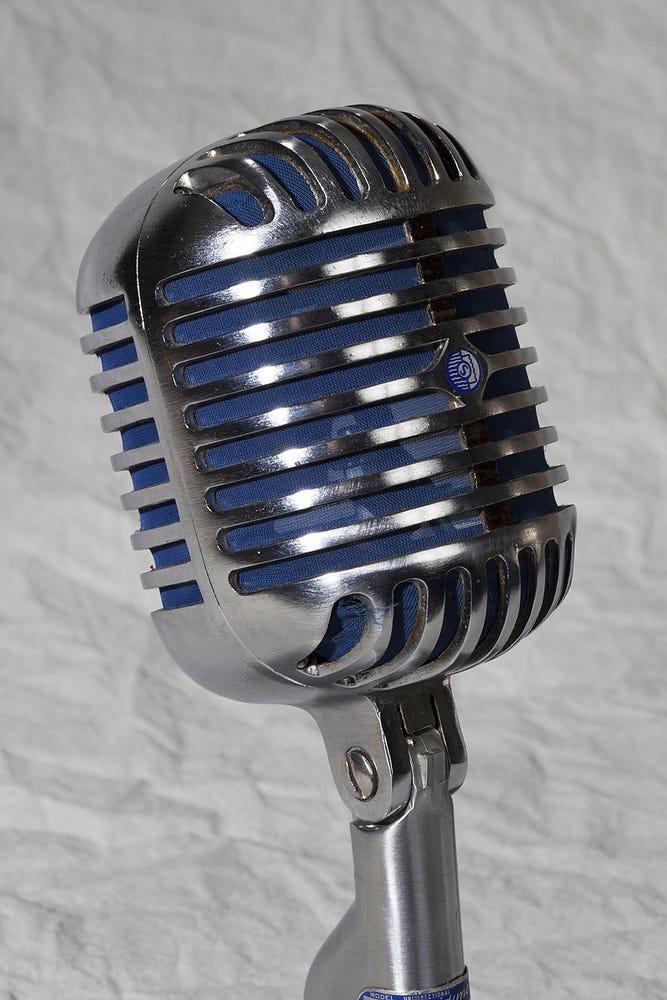
• The grill of the 1937 Oldsmobile Coupe was likely the inspiration for the 1939 shure unidyne microphone. An example of one form of industrial design imitating another. Elvis made the mic famous in the 50’s, and was also seen in similarly styled sports cars.
The power of ‘making it work’
A large part of what magic is about is finding our way out of places where we are stuck. Often we are stuck because our focus has become too narrow and we’ve become buried by habit. Here, mere imitation might not be enough. Thus the power of associative thinking, transmutation, can grant us new opportunities and creative ‘escape routes’.
Sceptics often malign magic, and magical results as being untestable, subjective and ‘anything goes’. I’ve lived in this head-space, and it is an attitude I had to unlearn in order to get better magical (and creative) results. It seems to me, that to write off magic in this way is also to write off similar forms of meaning making which are essential to being human: art, identity, culture, and our emotional experience.
‘Making it work’ for yourself, is, in my opinion, a larger part of how magic works than many magicians want to admit. The ability to develop a story as to how a ritual produced results. For instance, invoking Jupiter and a powerful thunderstorm following6. If you are unwilling to associate a thunder storm with a spell to a god of thunder then it is going to be hard to notice magical results. These powers of association are, I argue, where a lot of the power of magic lies. The better one becomes at ‘talking oneself into it’ the more fantastic the results seem to be. If you continue on this line the results should appear to break consensus reality. The goal is to get so good at noticing results that your ideas about what reality is are altered. Contrary to popular fears, this won’t necessarily drive you mad. The vast majority of magicians I know are quite sane.
‘But Ari, this is just self-delusion!’
I have several responses to this:
• Our very perception is built on heuristics - shortcuts that are ‘good enough’ to function, and produce results. Every function of our perception that is removed from ‘causal reality’ presents us a way to ‘hack’ the system. For instance, our brain confuses true visual perspective with ‘false’ perspective rendered in flat drawings, photographs, computer screens, and paintings.

Thus each of these can become a simulation of a direct experience. Art forms like musics, are arguable more illusion than reality, almost a type of induced synesthesia. Despite this, the average person can feel and talk about the effects of music without resorting to rants about how ‘music is fake’.
The same must go for magic, and other forms of creativity. The effects of music are real, despite it being built out of illusions, which ‘hack’ into the auditory, rhythmical, and emotional parts of our brains. Similarly, magic can be considered the gamification of one’s ‘reality tunnel’ experience. Like the creative act of making art, magic’s power is in its ability to move us and modulate our experience. After getting results, one soon realises that one’s entire experience of reality is always being modulated by factors not more or less real than those we can alter through ritual. This is a basic spiritual truth, which one can find in all forms of mysticism from yoga to heavy metal headbanging. Even if the magic is delusional, the opportunities and the effects on people are real. Similarly your ideas about the restrictions of reality are just ideas. Reality is in no way beholden to how you think it ought to be!
• Magical results are hard to pin down because they rarely manifest in the same way twice. This is not a reason to give up on magic. It simply makes magic a different act, than science, with different expectations and evidential grounds. That some things are more easily tested scientifically than others, doesn’t make these things more real. All studied scientists understand that nature doesn’t owe us her secrets. Despite the difficulty of measuring magic, magical results have being tested in scientific laboratories, for over 140 years, with quantifiable, if not dramatic effects7. Dean Radin, a scientist who studies psi phenomena, out lines this carefully in his work8. The Society for Psychical Research, founded in 1882, is still around today, and has documented evidence magical and psi phenomena, for all this time. Many famous scientists have been members.
Transmutation as a self-affirming act
When we imitate, we can take on the powers of that which we imitate, and those powers tend to disappear when we stop. Transmutation can turn one powerful act into limitless others. It can grant us the power of ‘originality’ and this can become a way to play with our identity.
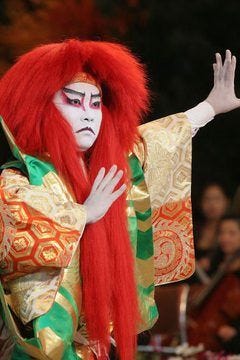
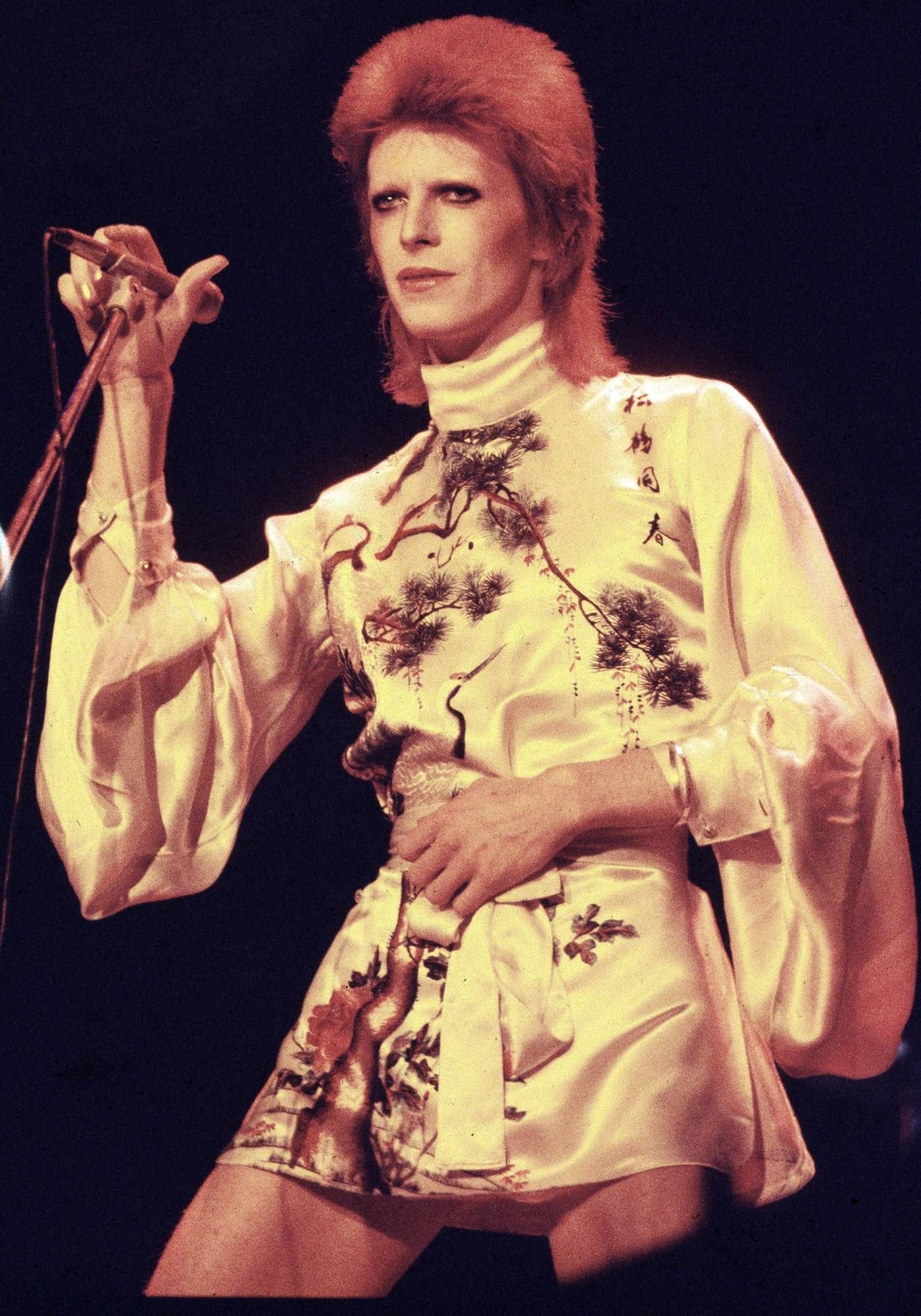
During the Ziggy Stardust era, David Bowie incorporated aspects of Japanese Kubuki theatre into his rock frontman performances, after first encountering kabuki concepts through his mime teacher Lindsay Kemp in the late 1960s. Thus some of the same traditional evocative costumes and movements that worked in Japanese theatre became an act of originality on rock and roll stages. Bowie, used these methods of transmutation and pastiche over and over again, layering numerous influences like layers of paint on a canvas. The name ‘Ziggy Stardust’ came from the ‘Legendary Stardust Cowboy’ a bizarre 60’s performer who melded space themes with the Wild West.. Ziggy’s story arch, that of a rockstar who falls from grace, was inspired by Vince Taylor, a 50’s and 60’s British rockabilly performer who became an early LSD psychosis casualty. Taylor came to believe that he was a divine alien messiah. Bowie witnessed this psychosis firsthand when they met around 1965. Ziggy Stardust became an embodiment of this in art.
.
Introjection
Introjection is a major part of the power of imitation, where the audience is drawn into a performance or an artwork by identifying with it. This involves a kind of ‘merging of the self’. It could be considered a type of empathy, where one shares aspects of experience between people as if the boundaries between you and the other person are weakened.
At it’s most extreme, introjection can cause problems as anyone who has ever had a stage-invasion can attest. Some people, usually middle-aged drunks, see something they admire from a performer and mistaken believe that, with no preparation at all, they can absorb and exhibit these powers and entirely replace the performer. They see and feel the performance and instead of admiring it, they think ‘I am the performer’! The rest of the audience may be experiencing something very similar, but they are able keep hold of the boundaries between them and the performance. Some of these audience members may become inspired to go home and practice themselves. Rather than practising, the stage-invader believes they can simply be awesome right away! and usually gets angry when this mysteriously doesn’t work (sad trombone).
The stage-invader is an extreme, (but unfortunately common) example of a more subtle tension. We love what we identify with and identify with that which we love!
The respectful imitator, who practises their craft, might still believe that they can one day have the power of the person who inspired them. Many rockstars such as the Beatles cite watching Elvis on TV as a pivotable moment where they decided to strive to become rock and roll stars. Thus entirely removing this ‘delusion’ of introjection might also cancel many valid art careers. Bowie’s pastiche was ‘original’ because he stood out against other rock frontmen. He was responding to the cultural backdrop of the 70’s. Simply becoming Ziggy Stardust in 2026 won’t achieve the same result.
One can however use Bowie’s methods to create a similar effect of ‘originality’. This takes risk. Most artists and performers fail more times than they succeed.
Transmutation offers us this solution: If Ziggy Stardust was ‘a washed up rock and roll star who thinks he is an alien’, perhaps one could create a modern rap artist character who is a displaced fairy trying to exist in the human world. This fairy has cast a ‘glamour spell’ to remain in the human world, but the more famous they become, the more the glamour spell fades revealing parts of their true form and pulling them back to the world they came from.
As far as I know this hasn’t been done before, yet I’m here to teach you that ideas like this are easy to have. The ideas themselves aren’t the power. The power comes from getting works of this type finished.
The next time you see something that moves you, be it art, music, fashion, or other types of performance, consider how you might transmute it into something nobody has seen before.
As you become practised at this the, your world will become infused with meaning and agency. Take this to it’s limits, and you have a perfect way for magic to function.
It is worth noting that lead has be transformed into gold several times by modern science. This process is not energy efficient and only radioactive isotopes of gold have so far been reproduced. These eventually decay into other elements such as mercury. However I enjoy the fact that the universe allows transmutation.
This is an imaginary example, I drive an old van with dents and peeling paint.
People throughout history have tried to explain that ‘major’ is happy because it contains simpler ratios, especially 5:4, the major third which is also the fifth harmonic of a string. A minor chord has the minor third interval, 6:5, which is more dissonant. The idea is then that dissonance is sadder and consonance is happier. The problem is that the major 7th chord is very consonant, and happy, even sweet. The major 7th interval however has a complex ratio of 15:8. This is usually heard as a dissonance until the major third is added as a third note. This third changes the context to the experience of a consonance. I’ve tested this on hundreds of students, fellow musicians, and other people. The takeaway is that the major 7th is either consonant or dissonant, but can’t be heard as both at the same time! It’s an auditory illusion. I argue then that music is not fundamentally maths (for instance the aforementioned ratios), and that the major 7th chord is one of the many auditory illusions that music exploits to even work in the first place. I define music as a way to manipulate a human’s perception. Magic, whether it’s stage tricks or occult rituals usually functions in a very similar way.
Many sceptics fall in a trap here that I don’t want to waste time on. Yes the brain is a wholistic organ, yet specific types of cognition are also usually regional. Like Iain McGilchrist, I find utility in the ‘left/right’ dichotomy. Some of this discussion is based on neuroscience and some is symbolic. Here should care more about the latter. Many people say they don’t believe in brain lateralisation, but I find these people are usually zoomed out where McGilchrist is ‘zoomed in’. I hope this distinction makes sense.
Some aspects of language, such as metaphor, are usually right-sided. However damage to Broca’s (speech production) and Wernicke’s (language comprehension) areas on the left side will cause the patient to lose the power of speech and language processing: Damage to Broca’s area leads to non-fluent speech, Wernicke’s to fluent but nonsensical speech (word salad). Right-hemisphere damage spares basic syntax and lexicon, can impair pragmatics, humour, and metaphor comprehension.
This happened to me once. My city was struck by lightning at least eleven times (as reported locally) less than an hour after I cast an evocation to Jupiter. I don’t consider the spell the ‘cause’ of the lightning, yet the synchronicity was clearly linked to the spell. I discuss the nuance of ‘non-causal’ meaning making here.
As a magician, it seems self-evidential that reducing the variables which allow an act of magic to manifest results, will have detrimental effect on the probability of those results. What is interesting is that a measurable effect often still remains.
See his books: Real Magic, and The Science of Magic.