
On Muses
Inspirations from spirits and human beings

The Greek word mousa, from which we derive ‘muse, means ‘art’ or ‘poetry’, as well as being a type of goddess. In classical times, to ‘carry a mousa’ was ‘to excel in the arts’.
The word has extremely ancient origins deriving from the Indo-European root *men-, ‘to think’. This is also the source of Greek Mnemosyne, the goddess of memory, and mother to the nine muses.
This root *men-, also gave us ‘mania’, ‘mind’, ‘mental’, ‘monitor’, ‘mantra’, ‘music’, and ‘amusement’. A muse could therefore be understood as mental spirit, who is the daughter of memory, and therefore tied to learning. The implication is that one gains the influence of a muse through practising a craft. Muses were especially associated with the performing arts, music, and recited language (rather than written). In oral cultures, especially those with bardic traditions, one can find elaborate methods for extending the human memory, such as the ‘method of loci’, also referred to as ‘memory palaces’1.
Muses as goddesses
In Homer’s day (8th Century BC) it seems there was one muse, often referred to as ‘the daughter of Zeus’2. Later there were stories of three muses: Melete (practice), Mneme (memory) and Aoede (song). These names outline how the Muses were associated with learning as well as mastery of the arts. By Hesiod’s theogony (circa 730–700BC) there are nine muses, which is now the most common story, who are the daughters of Mnemosyne, and Zeus. Mnemosyne representing memory, and Zeus representing wisdom and divine order. The muses could perhaps be understood as those goddesses who impose order (Zeus) on memory (Mnemosyne), thus having power over preservation of the past and the framing of truth.
“For wise Zeus lay with her [Mnemosyne] nine nights
apart from the immortals, going up to the holy bed;
cheer the great mind of father Zeus in Olympos,”
telling things that are and will be and were before,
but when a year went by, and the seasons turned round,
as moons waned, and many days were completed,
with harmonized voice; the unbroken song flows
sweet from their lips; the father’s house rejoices,
she bore nine like-minded daughters,
in whose breasts and spirit song is the only care”
-Hesiod’s Theogony
The nine muses are:
Calliope (epic poetry).
Clio (history).
Polyhymnia (hymn and mime).
Euterpe (song and elegiac poetry).
Terpsichore (chorus and dance).
Erato (lyric choral poetry).
Melpomene (tragedy).
Thalia (light verse and comedy).
Urania (astronomy and astrology).
In some stories there were three or four muses, and they were sometimes the daughters of Apollo, who was sometimes referred to as Apollon Mousēgetēs (’Apollo Muse-leader’). As Apollo is the god of oracles this also makes sense.
Other cultures have similar spirits of poetry, dance and music, for instance the Hindu Apsaras: Celestial nymphs skilled in dance, music, and seduction; who inspire kings and ascetics. In the Vedic tradition there are also the Gandharvas: Male ‘muses’ who are celestial musicians and singers who guard soma (divine nectar) and inspire earthly arts.
Personified creativity
A muse can be understood as a personification of creativity. These can be, gods, spirits, or relationships between people. As humans are prone to drama, the latter usually occur in tense relationships with many unresolvable aspects (part of what I call meaning engines).
As I have explained elsewhere, one can use the part of one’s mind that evolved to deal with people and relationships, to throw extra thinking ‘bandwidth’ at a problem. This is one way to understand spirits. When you do this, you can reasonably expect to receive answers and emotions as if you are dealing with a person.
This is most obvious in fiction, poetry and songs, which deal with relationships, but can also be more abstract, for instance considering nature a god or goddess, or naming a musical instrument.
My decision to work with a muse
Creating a space for a spirit to inhabit
My recommended way to invoke a muse, is to decide on a character you would like to write about, preferably a unique take on an archetype, and then notice which mythological spirits, people, or characters come to ‘inhabit’ that conceptual space.
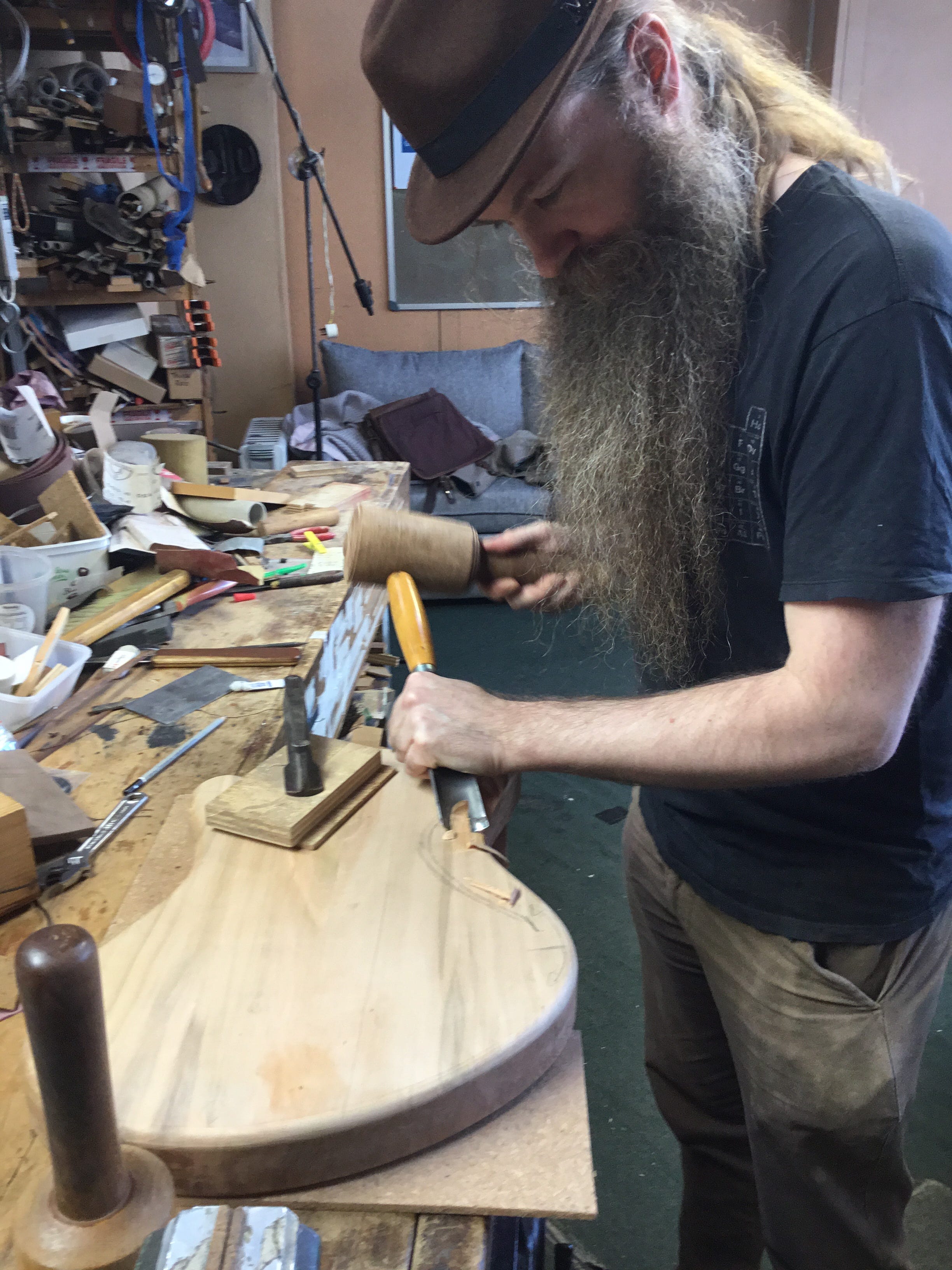
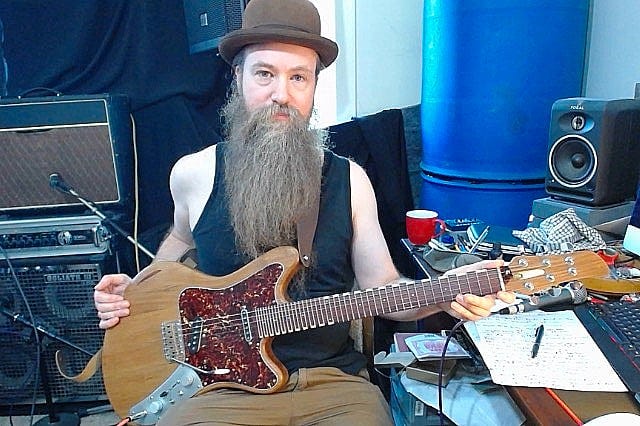
In my case, I am writing a concept album that started with the question: ‘What if Orpheus, the mythical singer, was a woman, and her lover, Eurydice, were a man’. I then renamed them ‘Orphea’ and ‘Eurydikos’. To begin with I was building a microtonal (24EDO)3 guitar with my friend, luthier Peter Stephen. I like to name the instruments I build, so I named the guitar Orphea, the female Orpheus, as ‘she’ will help me learn a new way to sing. The goal, which I am now gradually fulfilling, is to explore middle-eastern tonalities.
Shortly after completing the guitar I began to study ancient Greek modes (scales) and discovered that they used a 24 note microtonal system, for which the instrument I had created was perfect.
As I have been studying the history of magic for a large chunk of my life, it was curious to me how the Greeks influenced Islamicate cultures4. As the Italian Renaissance was started with the transmission of texts from Constantinople, who had a close association with the Islamic world (which was about to annex them) it seems an omission not to include these cultures in the story of Europe.
It is now clear to me that there is a close relationship between Turkish and Arabic ‘Maqam’ scales, and the Greek modes. These Greek scales were built around combinations of four note ‘tetrachords’. This is still an alternative system in music theory, which is still sometimes used to teach modern scales. The maqam system is built around 3, 4 and 5 note fragments called ‘jins’.

When recording a new album, I often start by recording one or two remakes of someone else’s songs. I often don’t release these, simply using them as a warmup, but I find this method is very helpful in getting a flow started. In this case, as I am training my ears to hear new intervals, this is necessary.
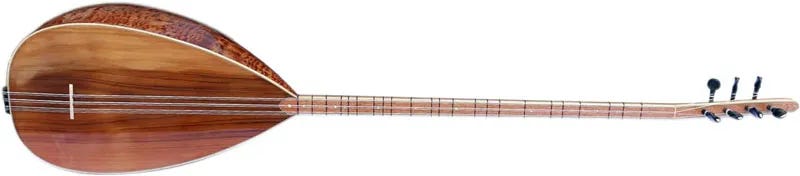
My microtonal guitar is particularly influenced by the tonality of the Turkish bağlama, a type of saz, or long necked lute.
While looking up bağlama music on youtube, I came across the singer Petra Nachtmanova, from Vienna. Her voice and playing style deeply resonated to me as one of the artist models for ‘Orphea’. I found out she was reinterpreting the music of the blind sufi songwriter Âşık Veysel (an ‘Âşık’ is a turkish ‘bard’). So here we have a woman who heard something special in the voice and lyrics of a male singer, and transmuted to her female, alto voice. Perfect. I chose to rearrange Nachtmanova’s version for my male voice, but stay in the same range, as a ‘counter tenor’5. I also rearranged her strumming style into drum parts, and the bağlama to my microtonal guitar.
After much effort, I ended up with a nearly completed track, albeit without a bass. I thought I would need to modify one of my basses with extra frets and booked some more time with Peter in his instrument workshop, causing a creative pause.
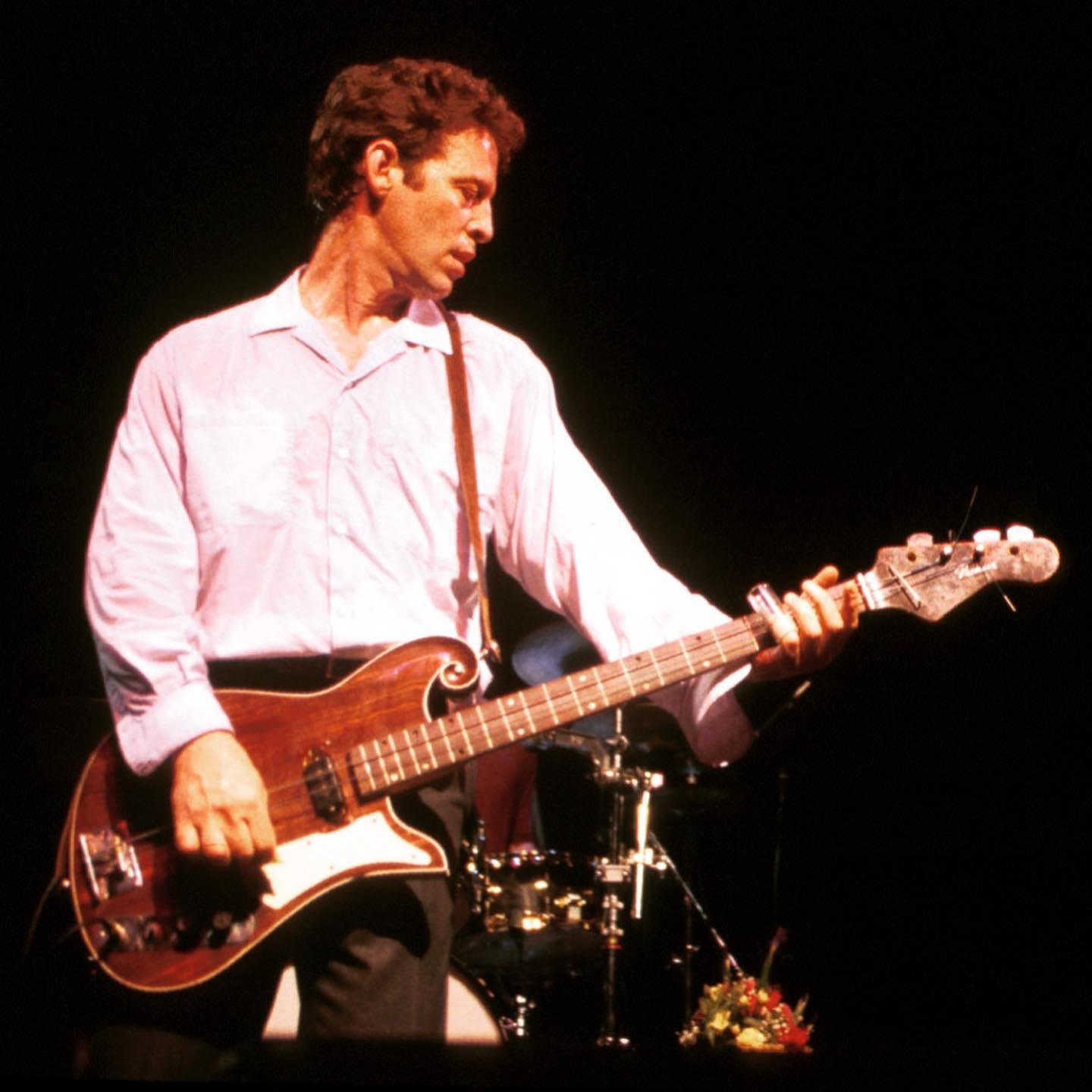
Another very important musician to me is Mark Sandman, from the band Morphine. Note his last name. I’ve never been able to find out if he was born into it6, or if it was a stage name. His band Morphine is named after the god Morpheus, and dreams feature heavily in his lyrics.
I’ve always loved the depth Mark can bring to simple lyrics, for instance this part of the song
‘All Wrong’:
“She had a smile that swerved,
she had a smile that curved,
she had a smile that swerved all over the road”.
The male character in the song is falling in love with a woman. When she smiles he feels like a car careening out of control. The repetition in the words is like swerving in and out of a lane.
Mark Sandman played a two string bass tuned to fifths, with a guitar slide. Interestingly just this year Eastwood Guitars have brought out a tribute model, so Mark seems to be back in the zeitgeist. Just in time.
When I was a teenager learning bass, I mucked around trying to play with a slide like Mark Sandman. I could never get the tone right. The strings of a bass are so thick and heavy that they just rattle the slide around and the low end suffers.
When I was about 24, in 2005, after pondering this problem for about a decade I had a dream:
I was sitting on a log under a tree holding my black four string bass. Mark Sandman was there across from me, also sitting on a log, holding his famous modified Premier two-string bass.
He began to speak in his slow baritone Boston drawl:
“Well, Ari. The thing is, when you put the slide on the strings you have to use these fingers to mute the strings behind the slide. That’s all now, bye.”
-I woke up-
My first thought was:
‘No way. Every time I’ve had a musical dream, it never sounds good when I’m awake’.
I went over to my bass, turned my amp on, grabbed a glass slide and tried Mark’s trick. Suddenly the tone was there. It worked.
Mark Sandman had died from a heart attack that he had on stage in Italy in 1999. He never made it to the hospital. This was my first ‘spirit experience’, and my first conversation with the dead. Whether or not you believe in an afterlife, when you are playing the magical game, such results are to be counted as ‘hits’. You may don or take off this hat anytime you wish and replace it with a sceptic’s hat. However, that mean be exiting the game.
After this I built my own two-string slide bass. I call it ‘the Sandman bass’.
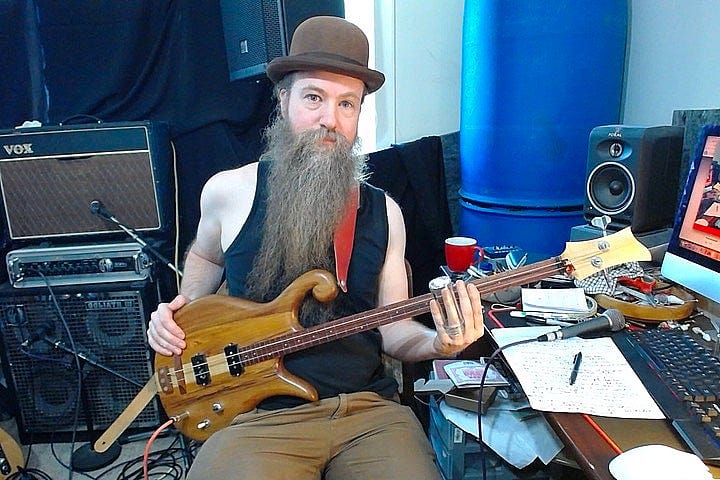
Thanks Mark (let me help you with the ‘bonus material’).
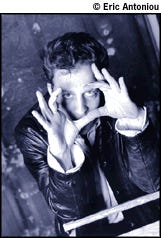
Back to December 2025… My track is nearly finished, but I don’t have a bass with the right notes on it and I’m waiting for it to be time to go into Peter’s workshop.
I have another dream:
I’m again sitting on a log under a tree. Mark Sandman is there across from me. He’s smiling but also slightly annoyed.
“Well Ari… The thing is. The bass you made. The one like mine. It has all the right notes on it Ari. It has the ‘microtones’, it’s sitting there waiting for you in your room Ari, you haven’t played it in a long time. That’s all now.”
I woke up. Slightly stunned. I went to the music room and picked up Sandman bass, retuned it to the key of the song and tried it. It was perfect. I got dressed, drove to the music shop, bought a couple of fresh strings, then went home and finished the track.
Mark Sandman had a muse called Lilah. He named two instrumentals after her, and his final post-humous album ‘the Night’ starts with the title track, which is a prayer to Lilah.
For years I wondered, who is ‘Lilah’?:
You’re the night, Lilah. A little girl lost in the woods
You’re a folk tale, the unexplainable
You’re a bedtime story. The one that keeps the curtains closed
I hope you’re waiting for me cause I can make it on my own
I can make it on my own
It’s too dark to see the landmarks. I don’t want your good luck charms
I hope you’re waiting for me across your carpet of stars
You’re the night, Lilah. You’re everything that we can’t see
Lilah, you’re the possibility
Since about 2012, I’ve been studying Kabbalah. A mysticism within Judaism that became a dominant cosmology (together with astrology) for Alchemists and intelligentsia during the Renaissance.
I have some Jewish heritage, and my name means ‘Lion’ in Hebrew. I’ve had to discover these roots mostly by myself. During my studies I found that ‘Ari’ or ‘Aryeh’ is a title for a scholar of Kabbalah. Not bad for an occult author, who has written about Kabbalah. I also found out that לַיְלָה is Hebrew for ‘night’. That’s ‘Lilah’ or ‘Layla’. She’s the personification of the night. She’s also an angel. She was Sandman’s muse. He was Jewish.
Like Sandman and Lilah, I’m asking ‘who is Orphea?’. From Petra Nachtmanova’s music, I had a connection to the lyrics of Âşık Veysel. In the next song I recorded, after the second Sandman dream, there is this line:
Leyla mıyım Mecnun muyum çöl müyüm - Am I Leyla, am I Majnun, or am I the desert?
‘Leyla’.
Wait is that ‘Lilah’? Is that לַיְלָה?
Yes. Leyla or Layla, is ‘the night’ in Arabic. Just like in Hebrew. With the same connotations.
Layla and Majnun is the central love story in Arabic influenced cultures (including Persia and Turkey). It’s often compared to Romeo and Juliet for the English, but it’s actually much more important, as I will explain.
Here’s a summary:
Qays and Layla are two children of the Arab Bedouin ‘Banu Amir’ tribe. They fall deeply in love. Their relatives forbid the union, preferring that Layla marry a rich merchant. Qays’ passionate public poetry proclaiming his love for Layla earns him the nickname ‘Majnun’. It means ‘driven mad by Jinn’.
Though Qays’ poetry is impressive, his obsession makes him an outcast, and he is deemed an unsuitable husband.
Layla who loves Majnun in return, is forced to wed a the merchant Ward (or Ibn Salam). She remains faithful to Majnun in spirit, never consummating the union, and secretly meets Majnun to exchange poetry from afar.
Devastated, Majnun flees to the desert, living ascetically among animals, composing verses, and rejecting cures. He goes to the Kaaba, and instead of asking for relief from his sadness, he instead prays to intensify his obsession.
Layla eventually dies of heartbreak after her husband’s death (while in mourning seclusion), buried in her wedding gown.
Majnun visits her grave, recites his final poems on a rock, and dies beside it in 688 AD.
Majnun went on to become a central figure in Sufism. In this practice you woo God, as if you are wooing a lover. Layla, became, like ‘Sofia’ in gnosticism, a personification of the reception of the holy spirit. Layla is spiritual gnosis. As ‘the night’, she is the ‘veil’ of esoteric knowledge.
Am I Leyla, am I Majnun, or am I the desert?
Is Orphea, my female Orpheus, my muse, bringing all of this together?
Eric Clapton write his song Layla, after he fell in love with his good friend’s wife. His friend was George Harrison, the Beatle, and the wife was Pattie Boyd7. The song was first released under the pseudonym ‘Derek and the Dominoes’.
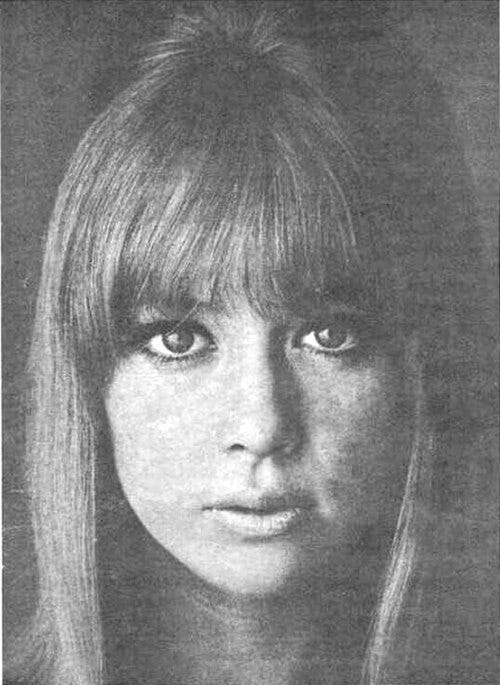
Pattie Boyd circa 1965
Despite the infidelity, Harrison and Clapton remained friends, with Clapton contributing guitar to While My Guitar Gently Weeps. Pattie Boyd remarried to Clapton in 1979 and they stayed together for a decade.
Clapton named the song Layla after reading about Layla and Majnun, their forbidden love and Majnun’s madness.
These are a few of the synchronicities, dreams and coincidences I have had so far in this ongoing project, my concept album Orphea.
I will release the fourth song soon, and will release tracks steadily throughout this year until the album is finished.
Human muses (or how to make relationships more complicated)
My less recommended way to engage with a muse, is to be inspired by a living person. When it goes well, this might charm the pants off of a receptive target. Like many human follies though, there are numerous ways it can go wrong. Artists and musicians are not necessarily better at understanding other people than anyone else. Rather, engaging art tends to exaggerate or even escalate situations in order to amplify the narrative.
The aforementioned Pattie Boyd not only inspired Eric Clapton’s songs “Layla”, and “Wonderful Tonight.”, but also her previous husband, George Harrison’s “Something”.
What did Pattie Boyd have to say about it?:
“I’m not a muse,” she says. “I mean, I understand what you’re referring to, but for me, and I say this with complete sincerity, everything is in the hands of the artist. It’s all in their head. They project that on whoever they want, but that’s the artist’s problem. Having said that, it makes me really happy to listen to them, but I’m not such a narcissist to believe that they’re talking about me. I don’t believe it. I still remember the first time that George told me he’d written something for me. I looked at him and I said, ‘Why did you write a song for me? Why do I deserve a song? What have I done to inspire it?”8
The song Valerie, by the Zutons was inspired by a real Valerie, singer Dave McCabe’s long distance girlfriend at the time. The song was later remade by Amy Winehouse with tones of a tumultuous and hedonistic romantic friendship between two women.
The real Valerie seems to live up to her wild image, and discusses how she felt about the situation in this interview. The plan was for her to fly to Europe to meet up with McCabe. Instead she got arrested for driving under the influence, and had to stay in the US. She relates this charmingly in the linked interview.
In a fairer, but perhaps even more dramatic interchange, Courtney Love, not only inspired Kurt Cobain, in songs like Heart Shaped Box, but also her friend and previous boyfriend Billy Corgan. (his Smashing Pumpkins song Luna is apparently written for her). In a more scathing attack, Dave Grohl wrote I’ll Stick Around, in response to their public, litigious spat. She herself wrote about Kurt throughout her album Live Through This, released after his suicide, but largely written during the last chapter of his life. In each case the resulting songs contributed heavily to the success of each of these artists, as if they were in some sort of soul contract.
The energy gained from these interactions can be instantly compelling, appealing to the gossiping nature of their fans. All narratives require tension, and a living muse is a quick way to achieve this, if not always a responsible one.
Fleetwood Mac also seemed to have an inadvertent ‘contract’ to make muses our of each other, most famously on the album Rumors. Lindsey Buckingham wrote “Go Your Own Way”, about splitting with Stevie Nicks, and she sang on it. Nick’s wrote “Silver Springs,” and “Dreams” amid their turbulent romance. ‘All is fair in love and war’ so they say. Stevie Nick’s had been the partner of Lindsey Buckingham, but had a secret affair with Mick Fleetwood, the eponymous drummer. Keyboardist and singer Christine and bassist John McVie also split up during this album after affairs. The songs “You Make Loving Fun”, “Don’t Stop”, and “Songbird” come out of the turmoil.
I can’t imagine that anyone envies the drama of this situation, yet the payoff for the fans was a classic album filled with emotion.
Projection
All of these examples represent an element of ‘projection’, the psychological tendency for us to see our own ideas, expectations, roles and traumas reflected in another person. While it can feel great for a while to be placed on a pedestal by someone, it comes at the cost of one’s own agency and being allowed to negotiate one’s own place in the world. I frame this in the question: “Can you be this for me?”. The measure of a safe relationship is the right to say ‘no thanks’! Better still is to be allowed to negotiate one’s own role.
While most projection isn’t harmful, it can become a crutch for those who are asking asking or insisting that other people be something for you that they should really be fulfilling for themselves. This is part of the process that Carl Jung termed ‘individuation’. His classic example is the Anima/Animus dichotomy.
The Anima, when unintegrated, is the idealised or pathologised female archetype that a male (or anyone who is attracted to women) projects onto the world. The reverse is the Animus, the male projection of a woman (or anyone who is attracted to women). The ‘Madonna-whore’ complex is a well understood version of how this can manifest where a man alternatively idealises a women in romantic virtue, or vilifies her in shame. In either case, the desire is for a level of control that can never be attained, and will often become abusive. A possible role reversal of this is the ‘Knight-beast’ complex, where a man is either seen as a rescuer, or an abuser. Both cases are symptoms of ‘splitting’. The psychological phenomena of ‘splitting’ -extreme all or nothing black and white thinking.
As in the Alchemy that inspired him, Jung thought that the ideal situation is for each person to become conceptually and psychologically an ‘androgyne’. That is, having the ability to fulfil ‘masculine’ and ‘feminine’ for themselves rather than necessarily expecting this from other people. Real relationships will then be able to play out in fairer ways where both parties have a higher degree of agency. Taking a muse in spirit rather than focusing on an actual person is a possible way to deal with these issues.
The way to get around pathological projection, is to allow real people space to surprise you. That is how you know you are dealing with a real person. You will be unable to predict their every action.
Similarly one might first create a role, and allow a real person to willingly step into that position, instead of choosing a role for a person without their own decision.
A situation of ‘can you be this for me?’ culminating a ‘yes’.
All fictionalised characters can be considered projections
Fictionalising one’s muses, can be a healthier way to deal with these projections. Especially when the character is both tense and sympathetic. At it’s best this is a way for the artist to take responsibility, with dumping a living person in dramatic role.
Characters can speak to societies grand projections, and the most successful characters are those that resonate most widely. By framing things in fiction and art we can compartmentalise in ways that can be spiritually and psychologically healthier. A type of catharsis. In the best cases the artist and the audience may learn some individuation, the ability to recognise their own projections and take responsibility for them. Thus a young woman may learn the confidence of the stereotypical male hero, or a man might learn to care for himself like a mother.
Are spirits projections?
Some spirit interactions seem to pivot on these projections. In a sense the projections are the ‘environment’ that they inhabit. Much like human relationships, a higher, more fruitful (but also more potentially dangerous) level of engagement can be reached when a spirit acts in novel and surprising ways.
In this sense one could say that there are ontologically two things going on with spirits. We project the characters we understand ‘upwards’ into the world of concepts, for instance when we read or write fiction. For instance superman is an exploration of exaggerated male power and responsibility. Belle from Beauty and the Beast is an exaggeration of a young woman forced into a marriage with an unsuitable husband, engaging her persuasive charm and intellect to teach the man to improve himself (in some versions of the story she teaches him how to read as well as confronting his anger). Secondly, archetypes and agencies, ‘descend’ into these projections as environments. Thus when you write a character, such as my female Orpheus, Orphea, patterns and characters out in the world, who fit, will make themselves available to you. I’ve already had female singers become interested in Orphea. I’ve had to explain, that whether or not I succeed, this is something I am trying to embody myself (and it’s very fun so far).
Even when fictional, spirits can behave ‘as if’ they want to be manifested into our world of physicality, language, and sensation.
As spirits are less attached to the physical realm and human institutions, playing out one’s projections and psychological tendencies in spirit, or with spirits, can have fewer knock on effects to one’s social reputation.
So should you choose to work with a muse? I recommend it, but I advocate for radical responsibility over your own projections.
Footnotes:
1 For more information, look into the astounding work of anthropologist and memory champion, Lynne Kelly.
2 The opening paragraph line of the Odyssey has “Sing to me of the man, Muse, the man of twists and turns….Launch out on his story, Muse, daughter of Zeus
start from where you will—sing for our time too.” -As Translated by Robert Fagles 1999.
3 24 even divisions of the octave, also referred to as ‘quarter tones’.
4 Islamicate: Those cultures that lived under Islamic rule, including Muslims, Christians, and Jews.
5 A counter tenor, is a male singing primarily in head voice. Thus baritones (like myself) can become ‘altos’ and tenors can become ‘sopranos’. The tonality is of course different to the female, but it can have a striking overlap. Similarly a countertenor doesn’t usually have the extreme high notes of the female normative range.
6 His mother released a book about the death of her three sons, also under name Sandman. So it’s possible that it is their family name.
7 A fashion model in her youth, Boyd went on to become a photographer and an author.